Hoary-bellied Squirrel
Callosciurus pygerythrus
Identification #
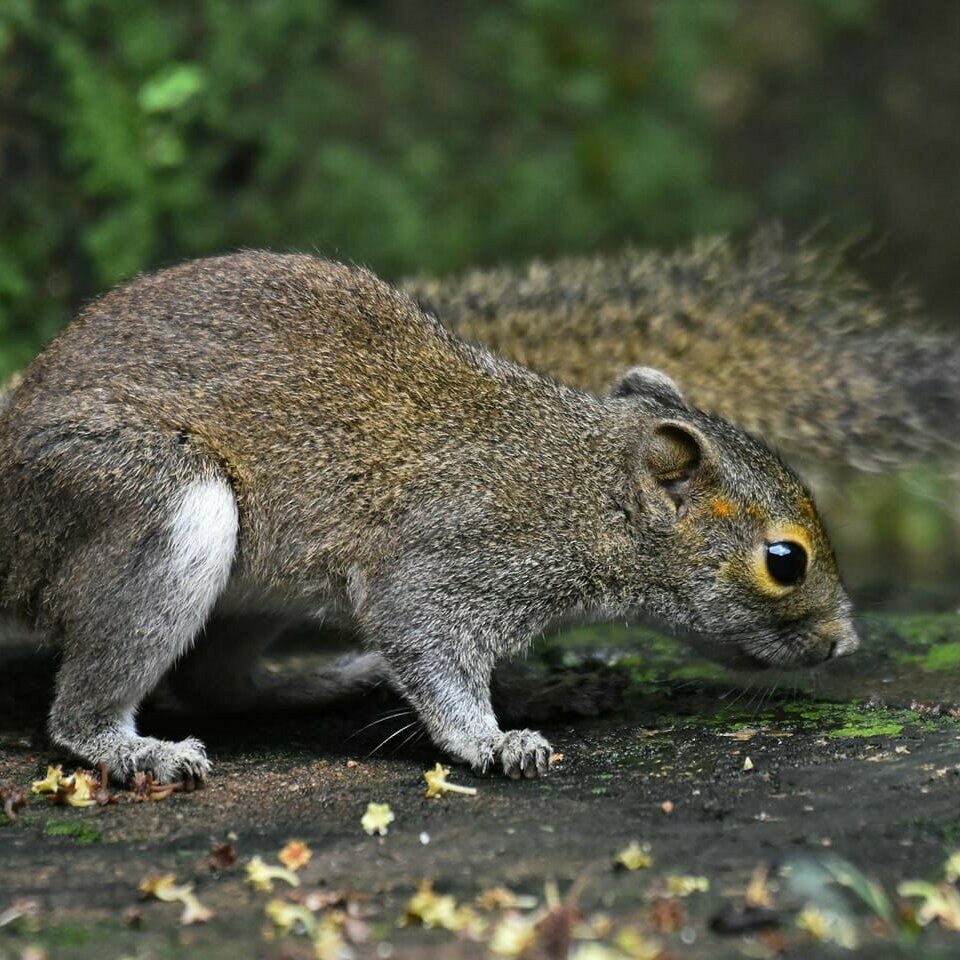
Morphology is variable across locations separated by geographic barriers. A total of seven sub-species have been described and have distinct phenotypes although the variation in appearance is not very large. The species in general is smaller in size when compared to Pallas squirrel and has a dark olive/agouti brown dorsal surface with and a gray/cream/cinnamon rufous ventral surface. Front-legs, feet and tail are darker gray in color when compared to the dorsum. The tail is variable with some subspecies having a black tip. Pelage varies seasonally and has a contrasting ocherous/cream/white hip patch in wet summers.
Distribution #
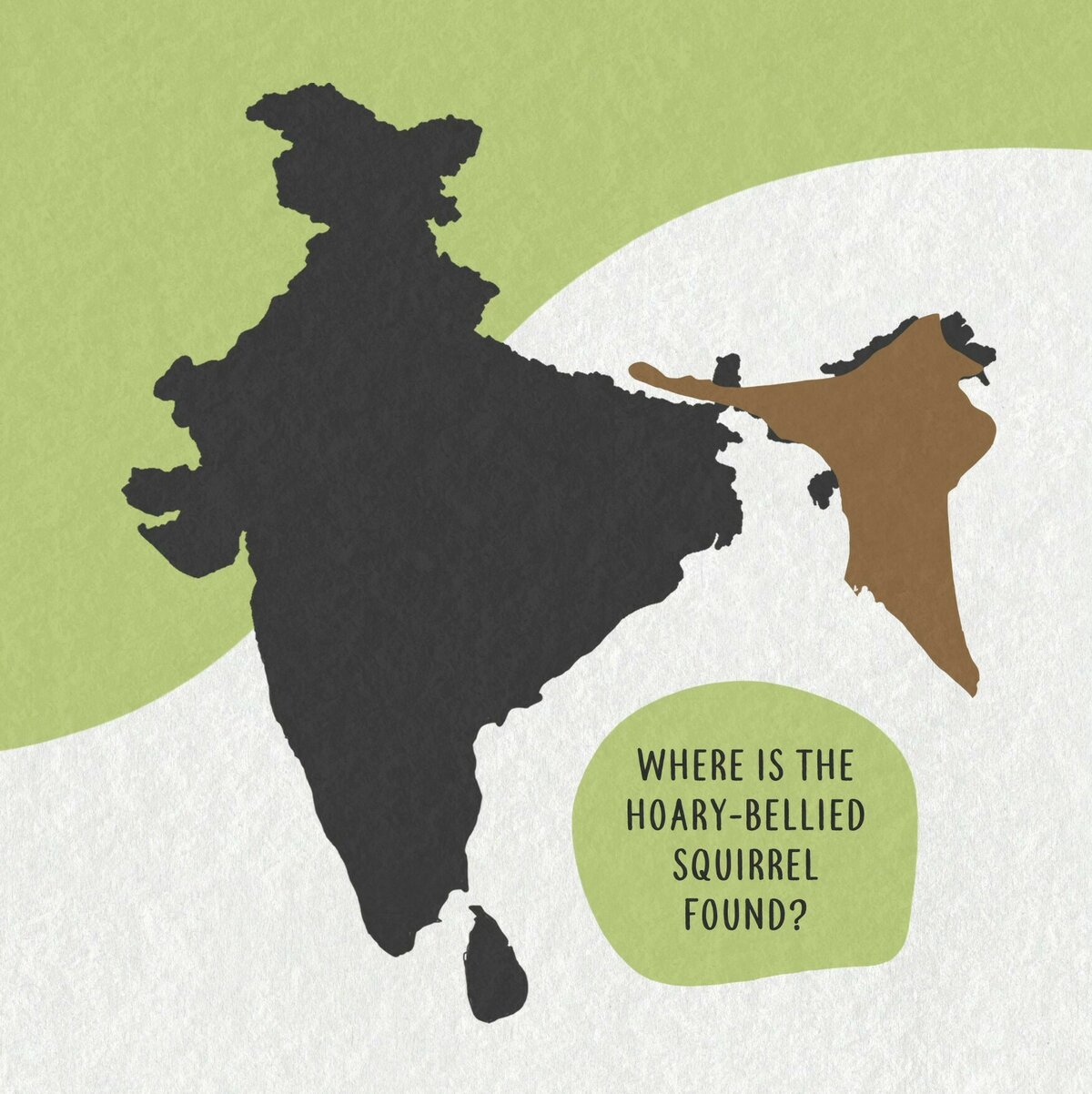
The species is distributed in Bangladesh, China, Myanmar, Nepal, Bhutan, and India. Within India, the species is distributed in the north-eastern states of Sikkim, Meghalaya, Arunachal Pradesh, Tripura, Nagaland, and Assam.
Habitat #
It occurs in rainforests, deciduous broadleaf forests, forest edges, gardens, agriculture fields, and plantations. Population densities are higher in disturbed forests when compared to intact forests
Diet #
These squirrels eat bark, leaves, fruits, flowers, seeds, lichen, and insects. Important food sources included: flowers and fruits of Bombax ceiba, fruits of Chukrasia tabularis, flowers of Duabanga grandiflora, bark of Pterospermum acerifolium and Kydia calycina. The species was observed to forage on the ground and hoard seeds of Chisocheton cumingianus, and two other species in a camera-trapping study in Pakke Wildlife Sanctuary in Arunachal Pradesh, India.
Vocalization #
Vocalisations are of the syntax 'chick-chick-chick' with the fundamental frequency being around 1100Hz.
References #
Duckworth, J.W. 2016. Callosciurus pygerythrus. The IUCN Red List of Threatened Species 2016: e.T3604A22253451. https://dx.doi.org/10.2305/IUCN.UK.2016-2.RLTS.T3604A22253451.en. Accessed on 18 February 2026.