Identification #
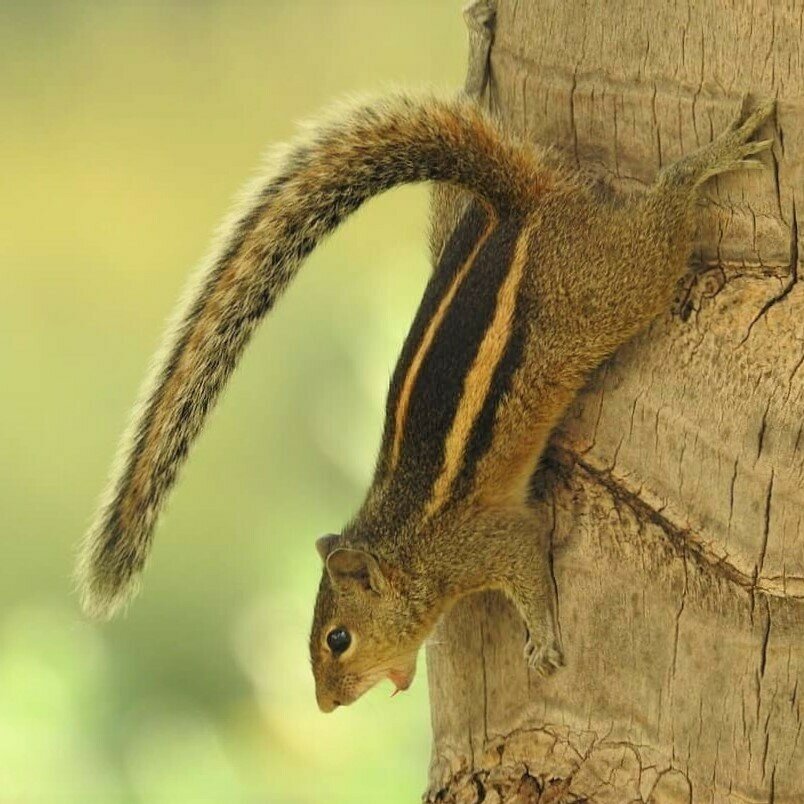
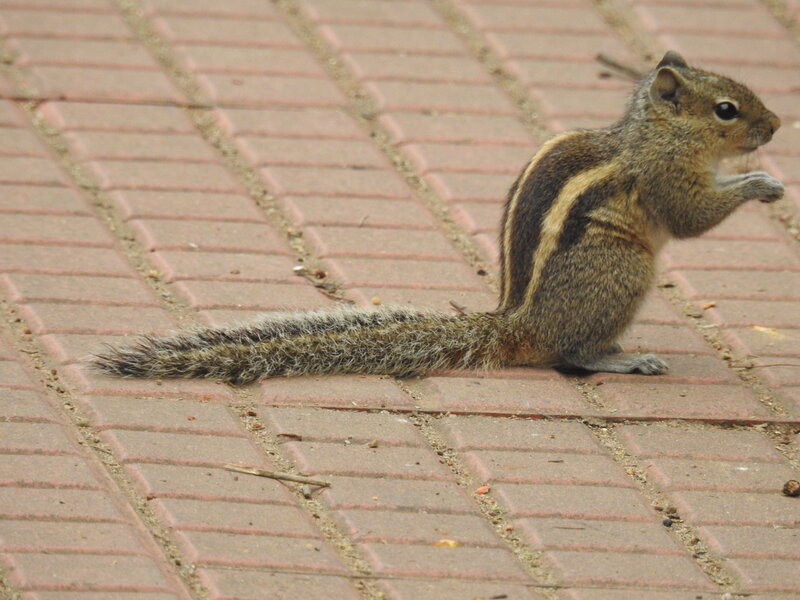
Brownish-grey coloured squirrel with a pale ventral belly. The dorsal surface has three creamish-white stripes running down a dark brown saddle. The white eye-ring is prominent, although some individuals also show paler face stripes. Tail is bushy, grizzled brown in colour with a reddish mid-ventral line.
Distribution #
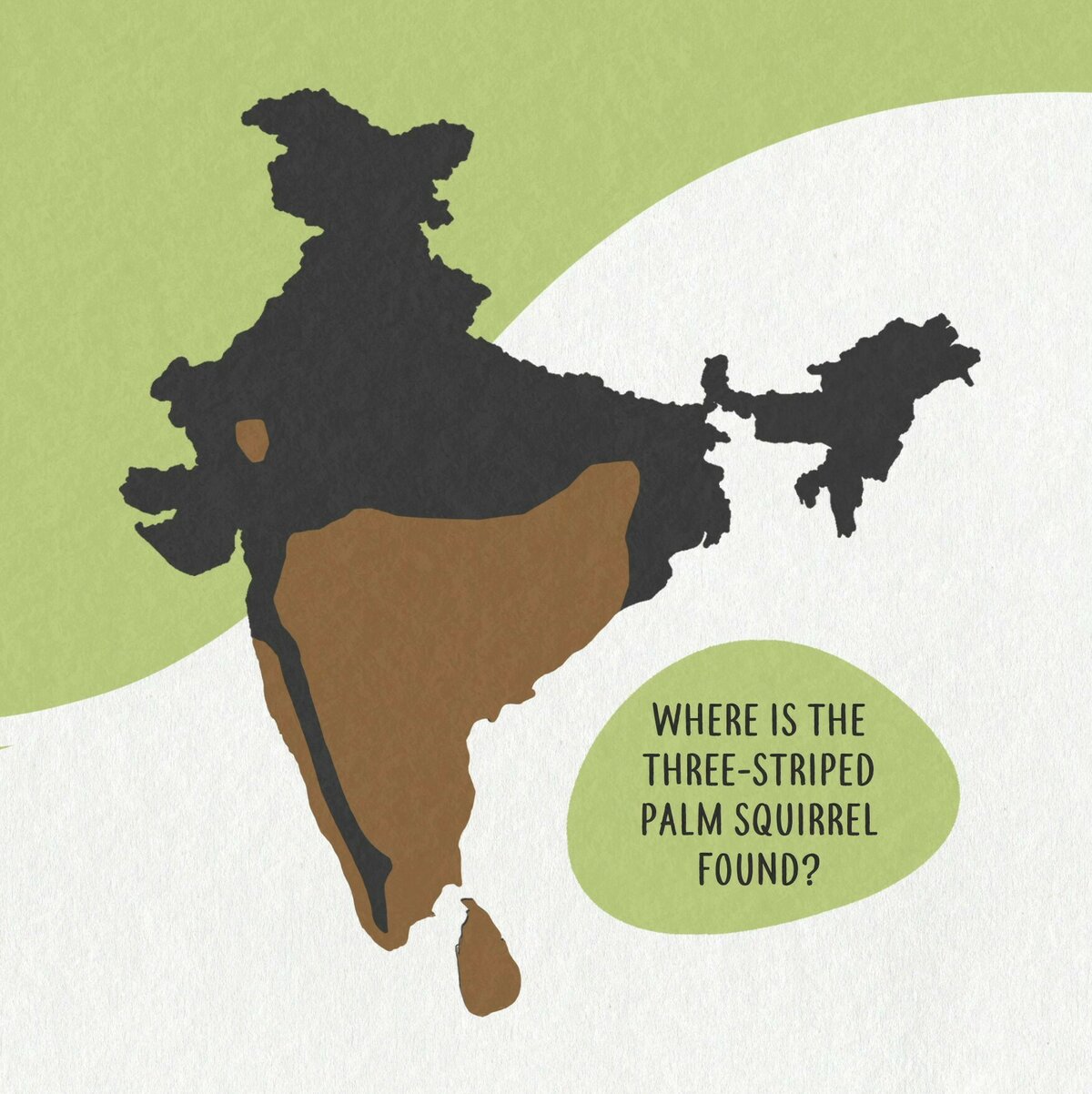
Endemic to southern India and Sri Lanka. Its known distribution is in the southern states extending up to parts of south-central India in the Deccan region.
Habitat #
They are found in a variety of habitats including scrublands, deciduous forests, plantations, villages and urban areas.
Diet #
They are generalist feeders. They are omnivorous and mostly feed on fruits, nuts, buds, bark, flower nectar, human-subsidised food like rice, and other leftovers. They are also known to eat small insects from the ground or from tree bark.
References #
Nameer, P.O. & Molur, S. 2016. Funambulus palmarum (errata version published in 2017). The IUCN Red List of Threatened Species 2016: e.T8701A115087934. https://dx.doi.org/10.2305/IUCN.UK.2016-3.RLTS.T8701A22259902.en. Accessed on 17 February 2026.
Datta, A. and Nandini, R. 2015. Other Sciurids. Mammals of South Asia. (eds A.J.T. Johnsingh and N. Manjrekar) Universities Press, Hyderabad. pp 513-571. LINK
Species Images

© asd 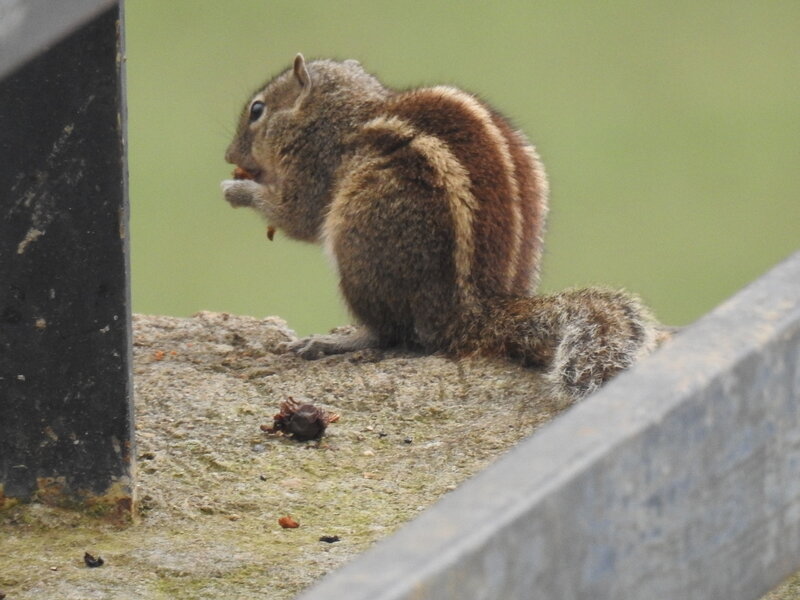
© asdf 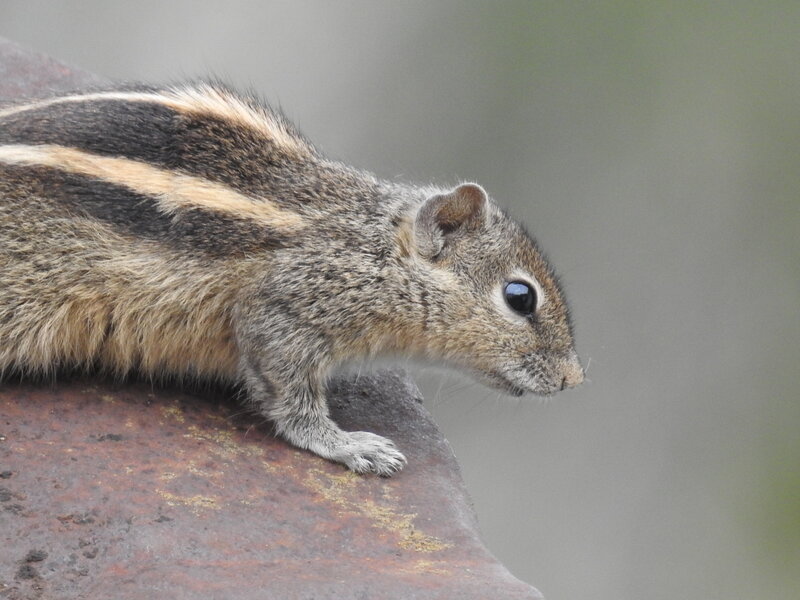
© asdf