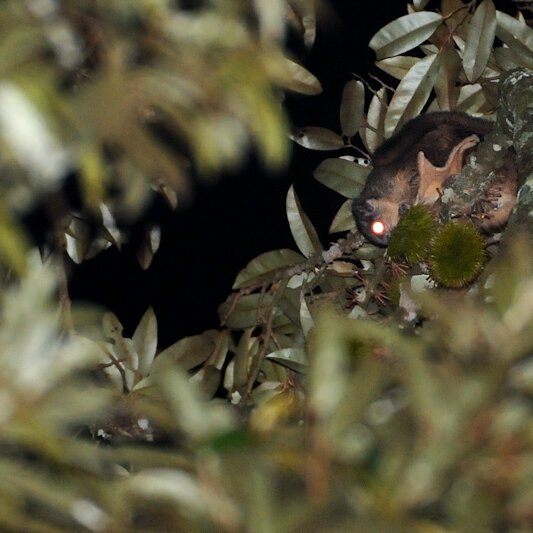
Travancore Flying Squirrel
Petinomys fuscocapillus
Identification #
The dorsal surface (back) is sandy to rufous brown, with the sides darker than the middle of the back. The patagium is dark brown with a pale, creamish edge. The underside is yellowish-white, extending to the cheeks and underlip. Feet are yellowish-brown. The tail has a central line of blackish hairs along most of its length, and is light brown on either side of this line.
Distribution #
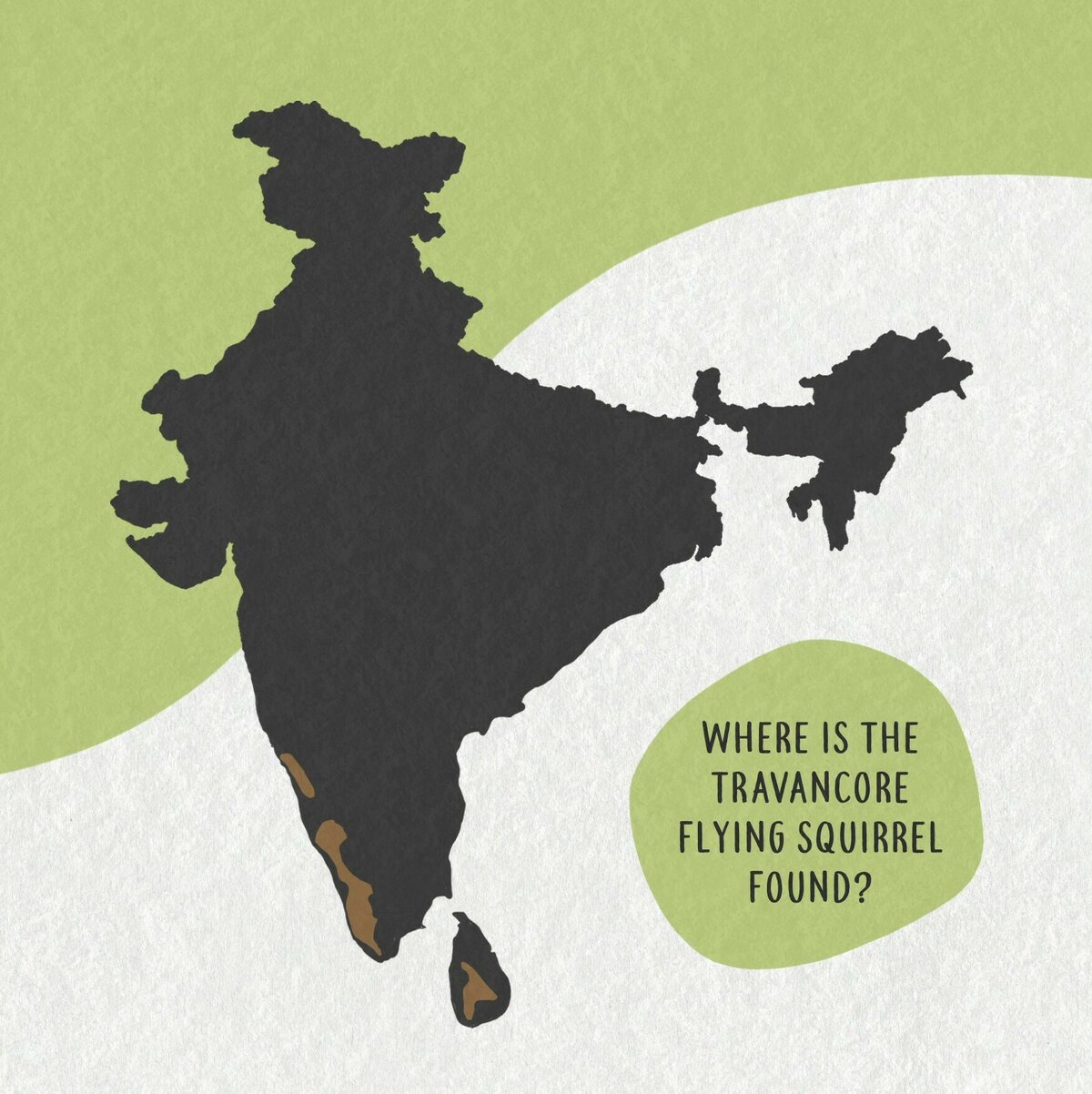
The species occurs in India and Sri Lanka, and in India occurs in the Western Ghats of Kerala, Tamil Nadu, Karnataka and Goa. It also occurs in the lowlands between the Western Ghats and the west coast of India, depending on the availability of habitat.
Habitat #
The species is found from sea level to 2000 m asl in evergreen, moist deciduous and montane forests. It is best seen in humid mid-elevation evergreen forests, though it can also be found in plantations adjoining forest patches.
Diet #
They eat leaves, fruits and flowers of a variety of trees such as Magnifera, Olea, Artocarpus, etc. They are also known to consume tender coconuts from plantations near forests.
References #
Kennerley, R. 2016. Petinomys fuscocapillus. The IUCN Red List of Threatened Species 2016: e.T16734A22241374. https://dx.doi.org/10.2305/IUCN.UK.2016-3.RLTS.T16734A22241374.en. Accessed on 18 February 2026.
Species Images
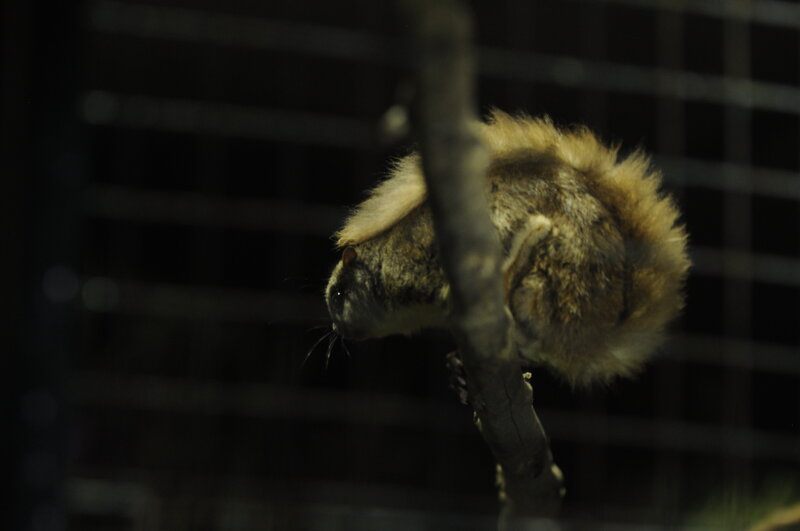

© Divya Mudappa