Identification #
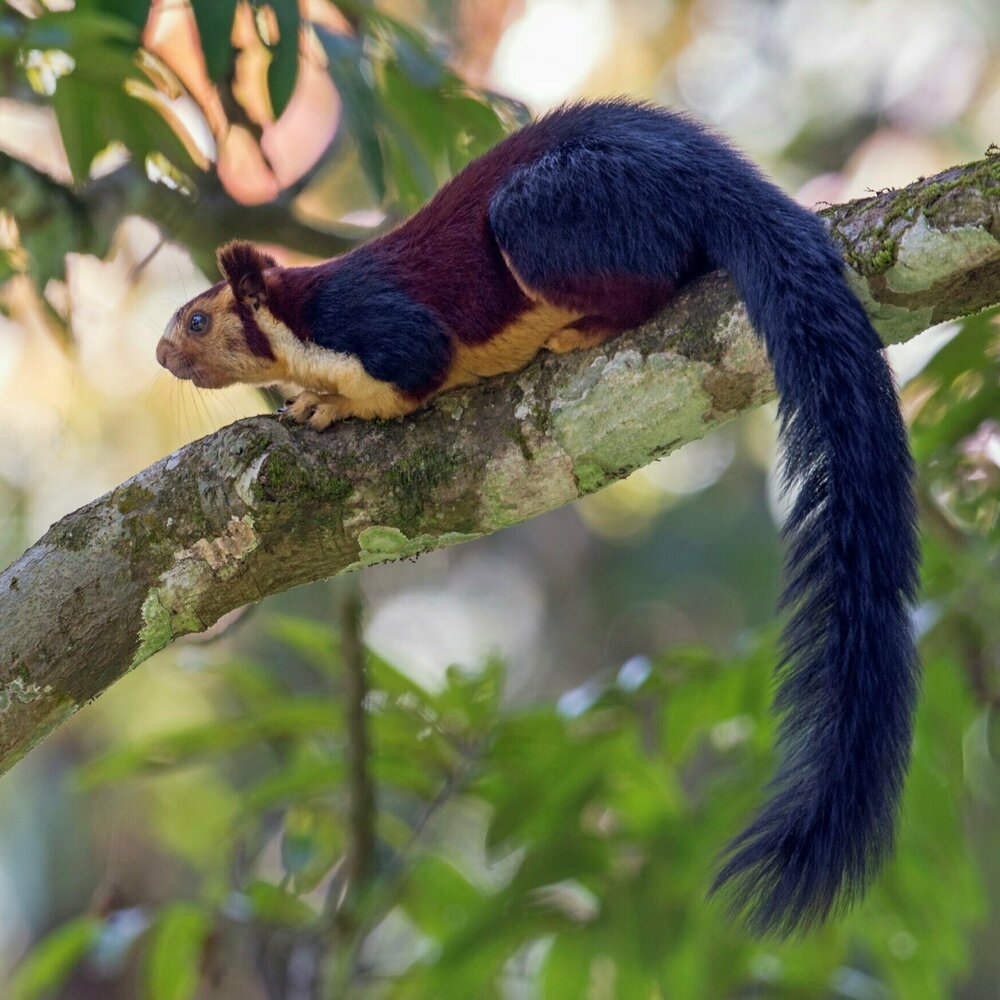
A giant squirrel with variable size, patterns, and dorsal colours (size and extent of colour patches) across different subspecies and races occupying distinct geographic areas. Dorsal body colour can range from black to brown to rust-red. Tails are completely black with a white or yellow tip. Ventral body colour is white or cream-colored and provides a large contrast with dorsal body colour.
Distribution #
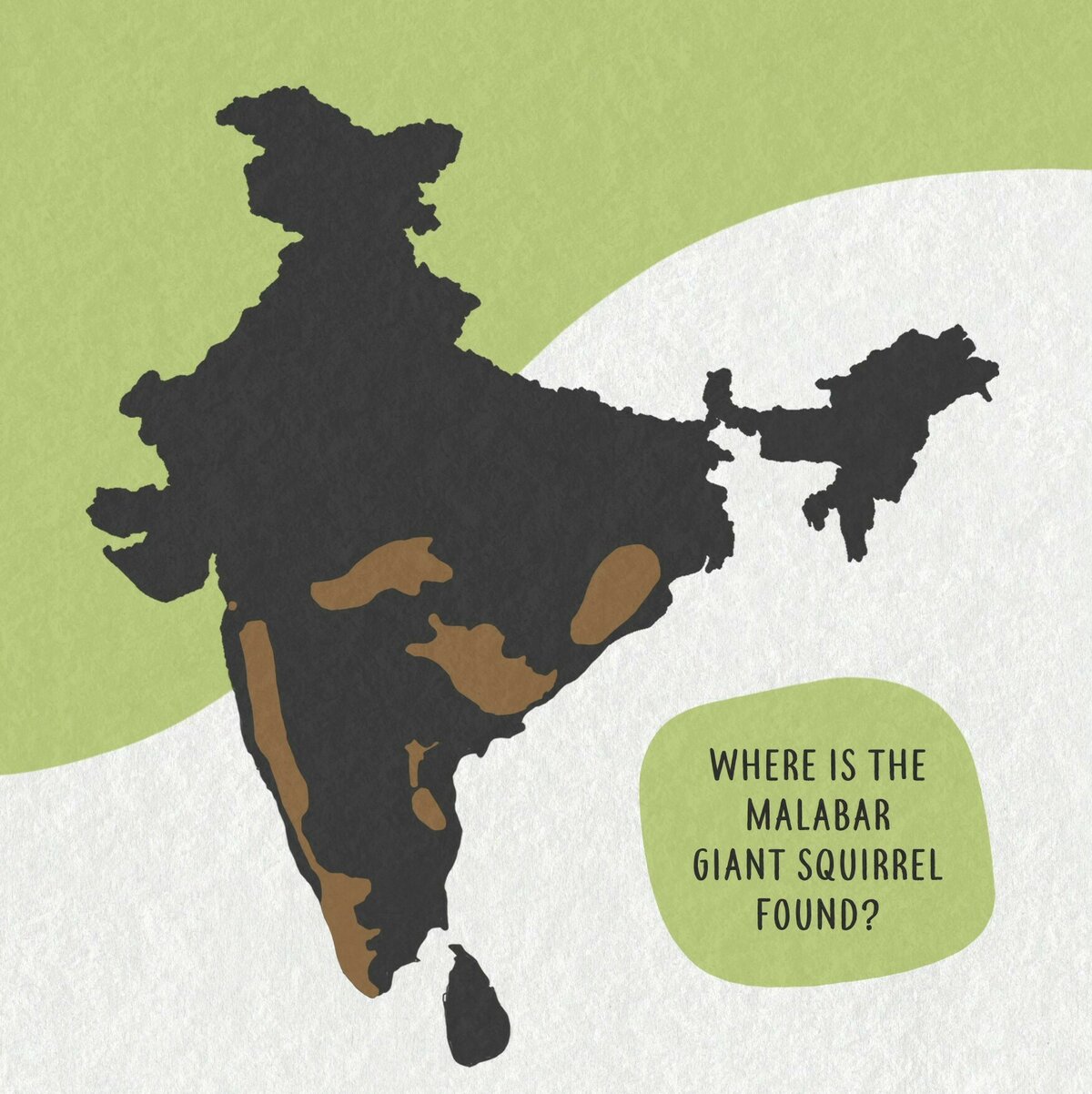
Distributed in the Western Ghats, Eastern Ghats and the Satpuras. States in which the species is found include: Madhya Pradesh, Chhattisgarh, Odisha, Andhra Pradesh, Telangana, Karnataka, Tamil Nadu, Kerala, Goa, and Maharashtra. The subspecies dealbata was historically distributed in Gujarat but is now considered extinct.
Habitat #
Found at altitudes of 180 to 2300 metres. The species can be found in deciduous forests, riparian forests, moist evergreen forests, sholas, and woodlands.
Diet #
Omnivores feeding on fruits, flowers, nuts, bark, bird eggs, and insects. Food is often clasped between forelegs and eaten on branches.
References #
Molur, S. 2016. Ratufa indica. The IUCN Red List of Threatened Species 2016: e.T19378A22262028. https://dx.doi.org/10.2305/IUCN.UK.2016-2.RLTS.T19378A22262028.en. Accessed on 18 February 2026.
Species Images
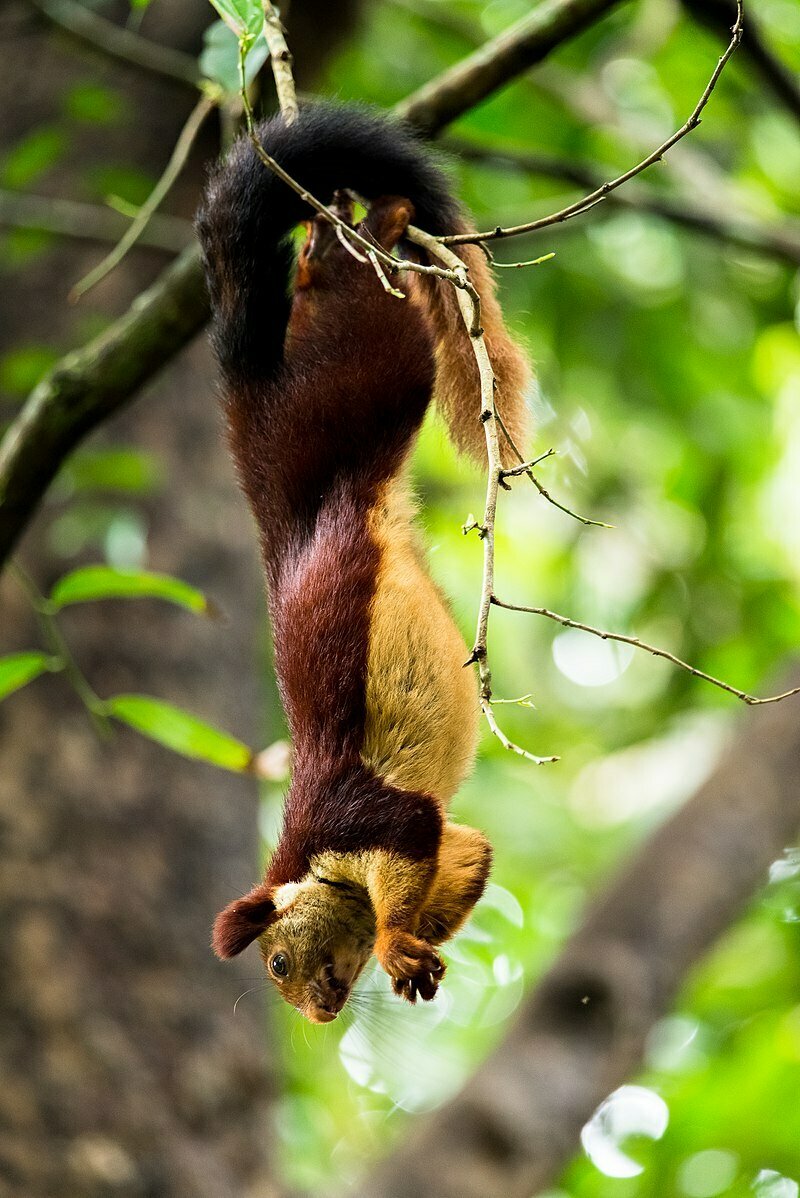

© Manoj Irrity 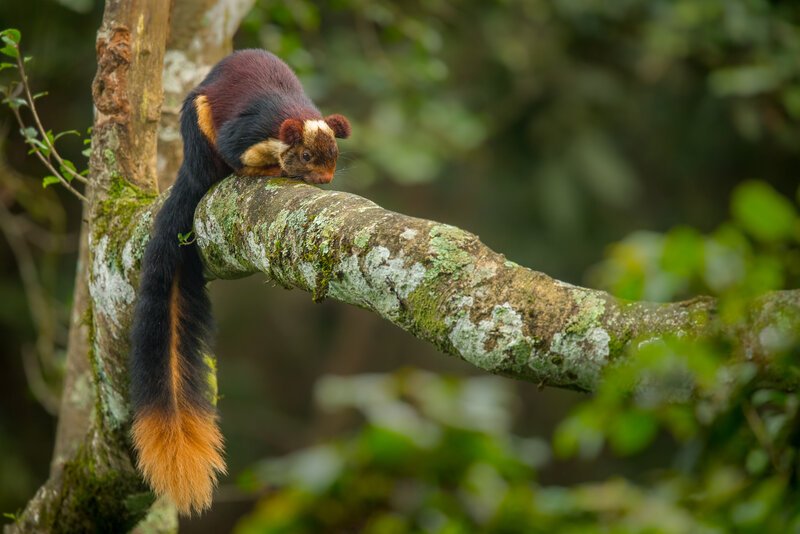

© Noopuran Sivaguru