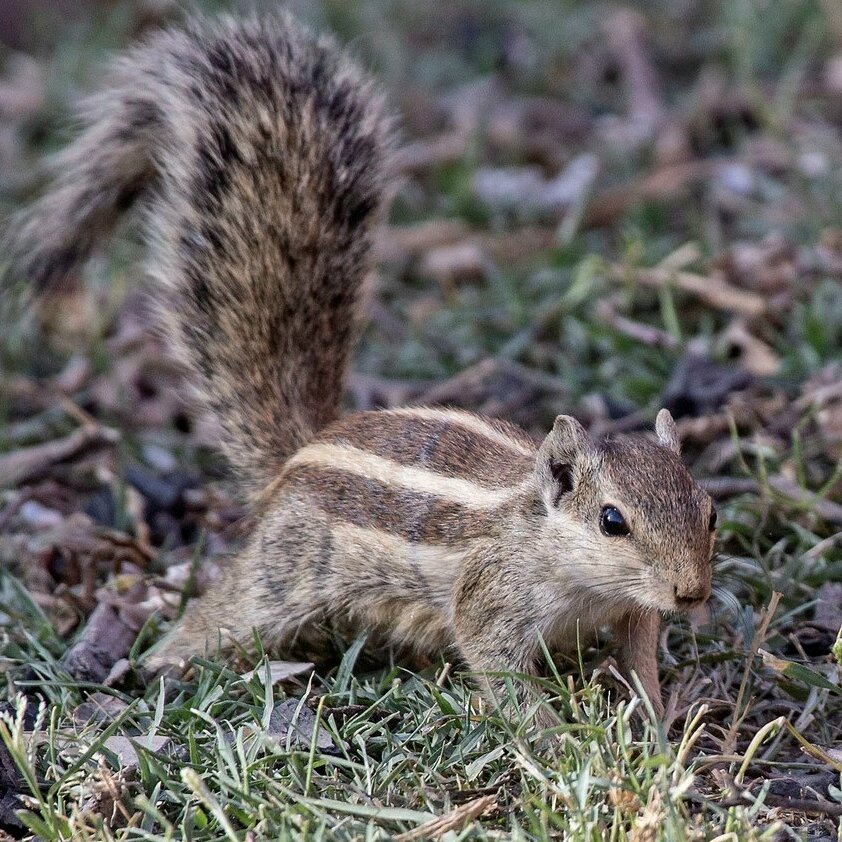
Identification #
Very similar to the Three-striped Palm Squirrel with which it is often confused. It has a total of five pale/white/light stripes on its back, which include two additional stripes on the lateral sides of the dorsum. It has two prominent pale white stripes running along the eye and ear. The tail lacks a mid-ventral line.
Distribution #
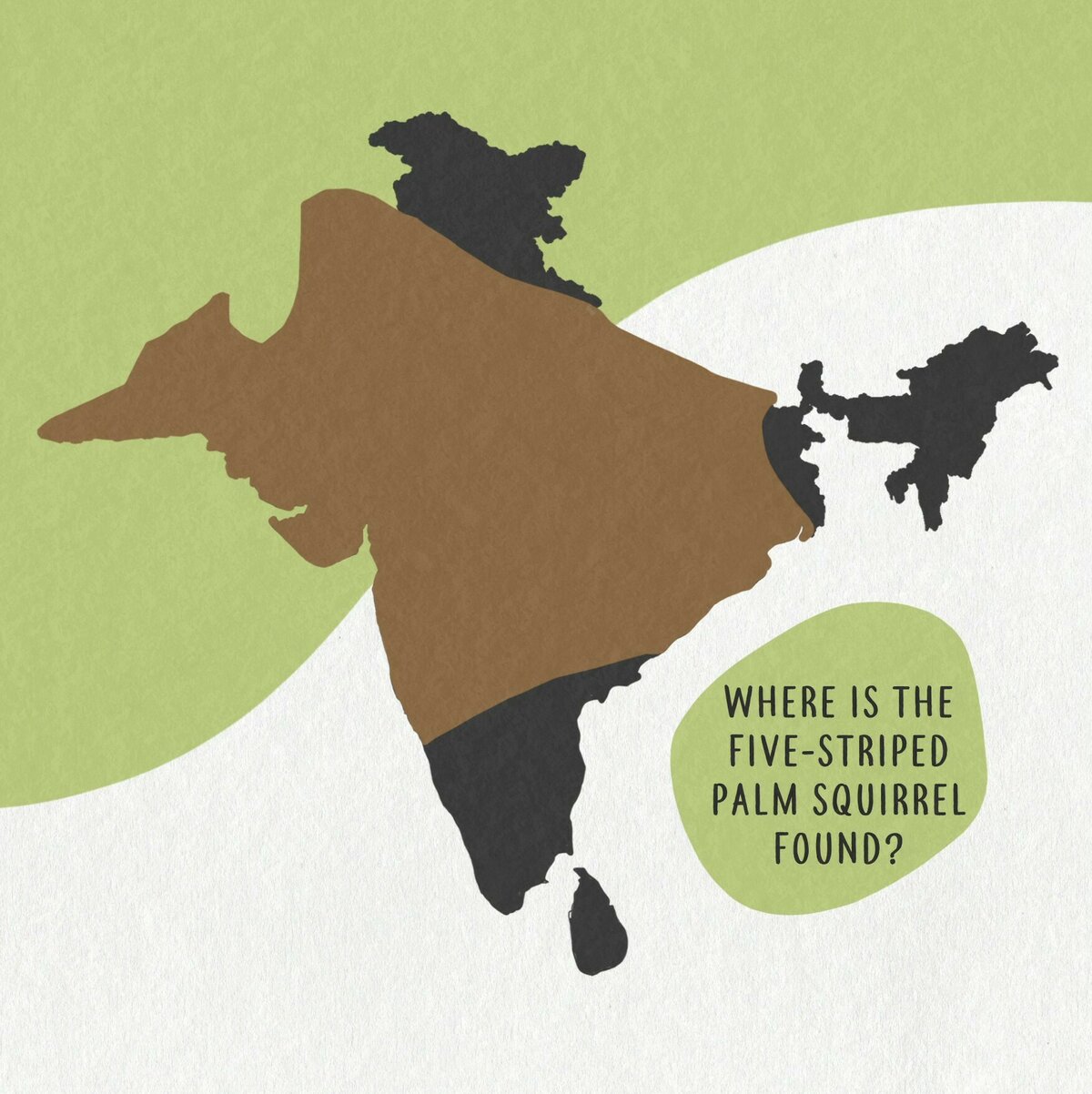
It is found in the northern parts of the Indian subcontinent, which includes central and northern India, Bangladesh, Pakistan, and Nepal. It has also been introduced in parts of Iran and Australia.
Habitat #
Very similar to F.palmarum. They are found in a variety of habitats, including scrublands, deciduous forests, plantations, villages and urban areas.
Diet #
They are generalist feeders. They are omnivorous and mostly feed on fruits, nuts, buds, bark, flower nectar, human-subsidised food such as rice, and other leftovers. They also eat small insects from the ground or from tree bark. They are also known to raid crops in parts of northern India and have been declared pests in some regions.
Vocalization #
Has a very low complexity in vocalization and the calls are characterized by the use of higher frequency sounds not found in the other two species. The unique feature of calls here is the presence of trills.
References #
Nameer, P.O. & Molur, S. 2016. Funambulus pennantii (errata version published in 2017). The IUCN Red List of Threatened Species 2016: e.T8702A115088099. https://dx.doi.org/10.2305/IUCN.UK.2016-3.RLTS.T8702A22259750.en. Accessed on 18 February 2026.